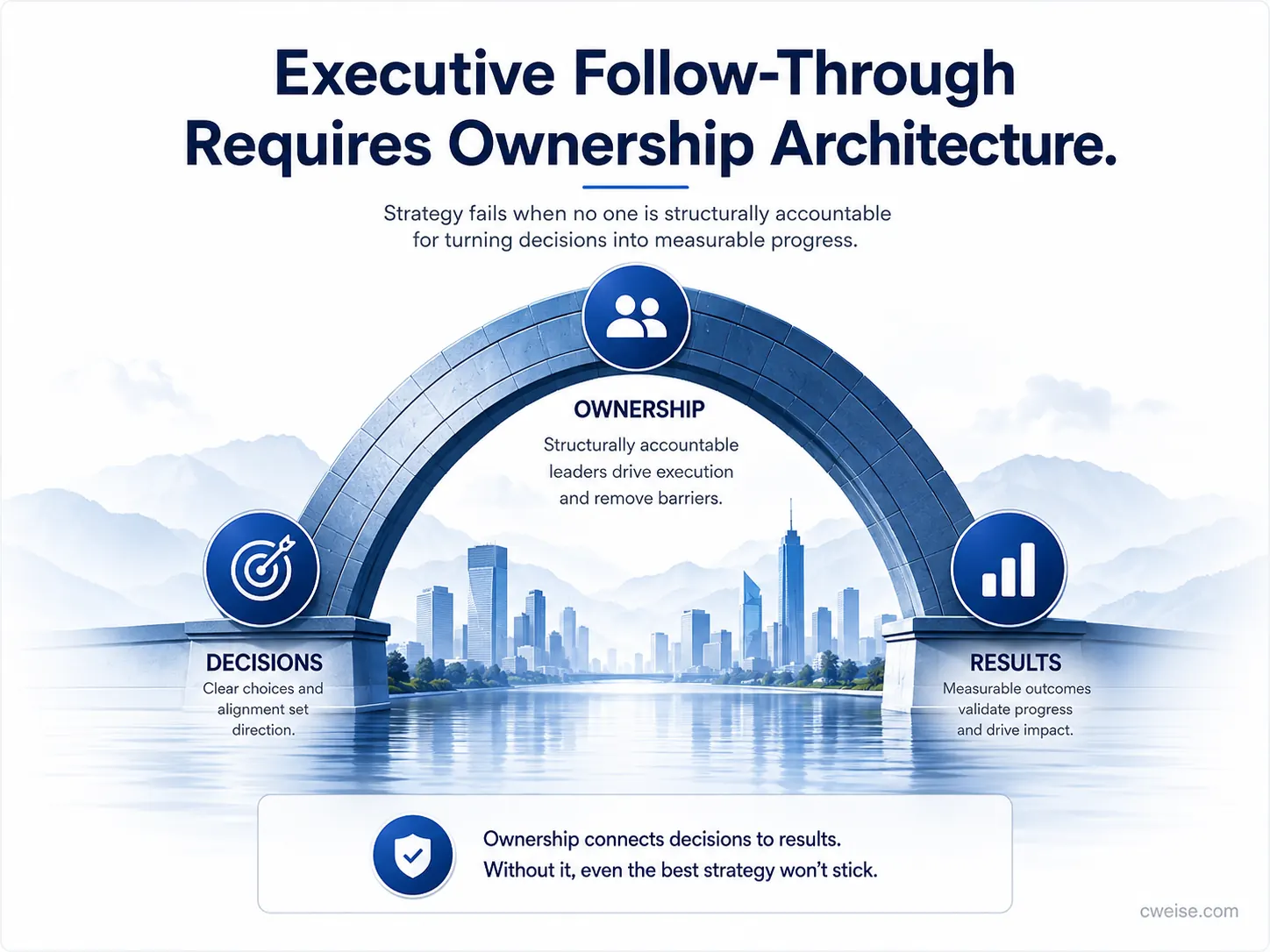
Implied ownership is one of the quietest execution risks in a growing organization. Everyone knows a priority matters, but no one can clearly answer who owns the outcome, who owns the next action, who owns the decision, who owns the dependency, and who owns the evidence that proves progress.
This distinction matters because executive ownership and task ownership are not the same thing. An executive may sponsor a priority, but someone must own the operating path. Someone must translate the priority into work, coordinate the dependencies, surface risks, resolve ambiguity, and make progress visible before the initiative begins to stall.
When ownership is only implied, accountability becomes theatrical. People discuss the work, report on the work, and express support for the work, but the system does not force clarity about who is responsible for moving it.